Learning from Trees - 14 - Pinecones Will Never Look The Same - More Spirals
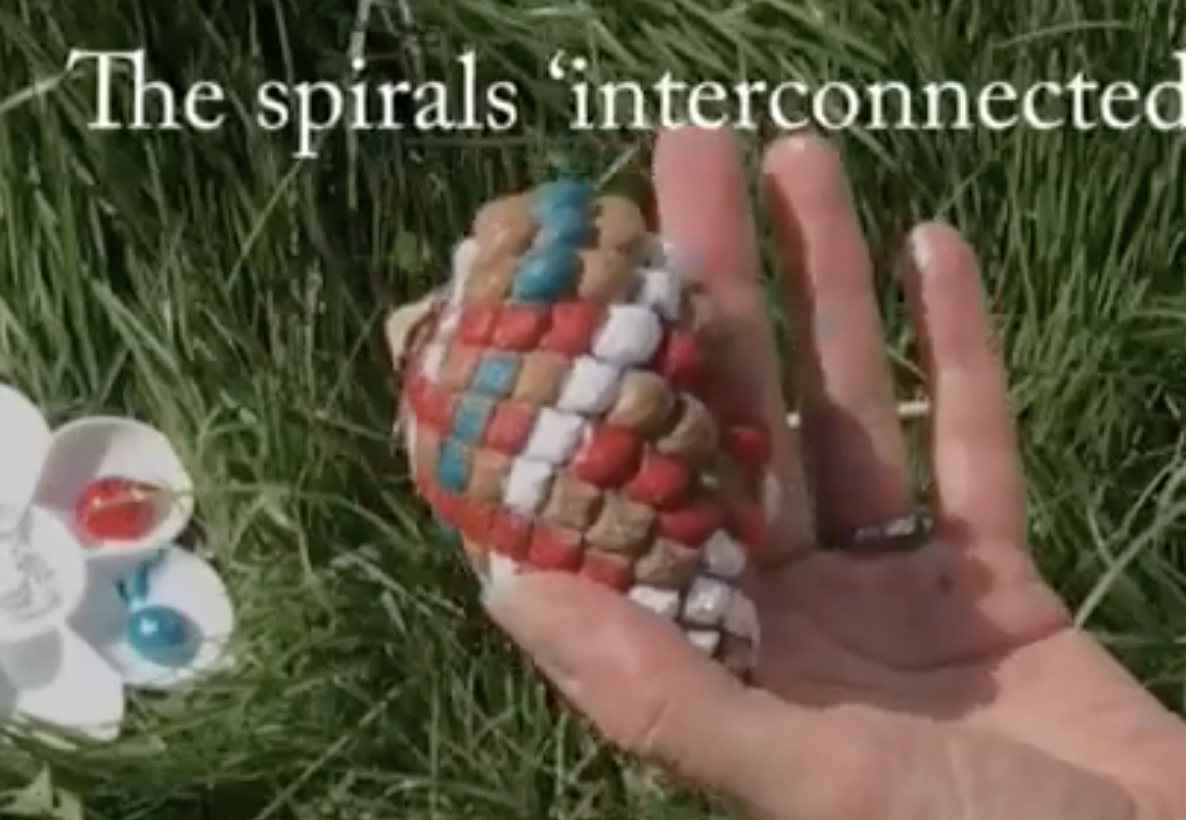
pine cones’ spirals interconnected source: YouTube
Learning from Trees - 14 - Pine Cones Will Never Look The Same - More Spirals
Spiral breathing into the pelvic floor and everywhere
Based on “Quadrant Breathing” as taught by Prisca WInslow GCFP®
I never imagined that pine cones could hold so much cross-species kinesthetic information, at least for me.
Pine cones show sensitivity to environment. The pine cone core is an exquisitely tuned humidity sensor. When the outside air is damp, the woody scales are drawn closed from the bottom up to keep the delicate seeds from molding or rotting. In drier conditions, the scales release from the top down to allow air to circulate around the developing seeds. At the right time, with the right humidity, the scales open fully to release the seeds..
Pine cone ‘breathing” is metaphoric for our breath, a kinesthetic cue to amplify the ribs’ movement. I imagine the woody scales, closed onto my torso in neutral, pressing down and out on the inhale. It’s a 3-D experience. The return to neutral comes from the bottom up, scales protectively returning to ‘closed.”
Pressing further downward on the exhale - as when the pine cone finally releases its seeds - matches how we send force down from the shoulders to feet for power.
And then there is the Fibonacci series: the numerical pattern that results in spirals and the golden ratio. In pine cones, sunflowers, spiral galaxies, the spiral optimizes the even distribution of pieces for maximum close packing, maximum buffering, and structural strength . The human hand complies with this Fibonacci sequence (see video cited below.
Speakiing of strength, Energy flowing down the arm and opening the hand on the inhale, the curling from the fingertips up on the exhale models the arm’s power. Imagine a karate punch. The inhale loads up the potential energy in the core as the hand opens. The exhale, the grunt from the core, roll the fingers into a spiral, extend the elbow, and roll out the shoulder blade for power. This applies to everything from self defense to stirring a pot to reaching for something heavy and high up.
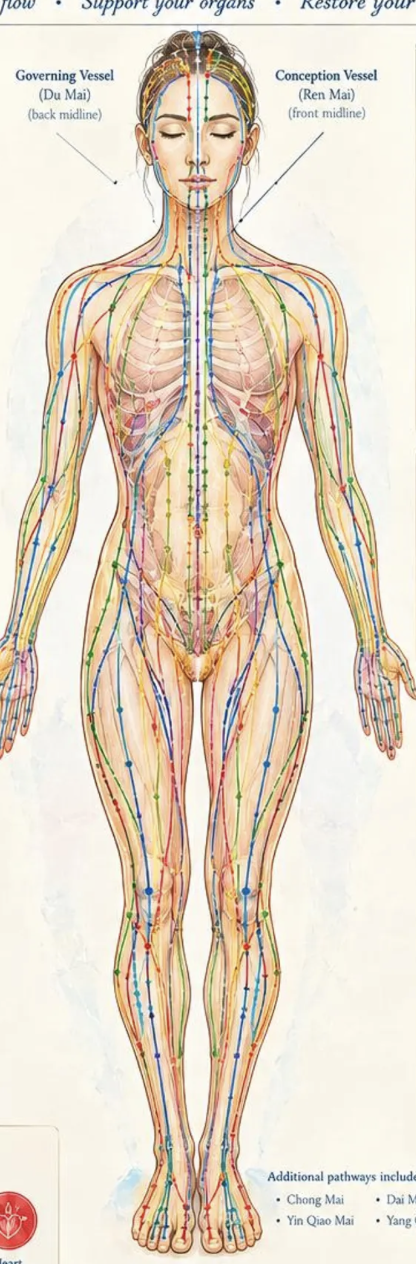
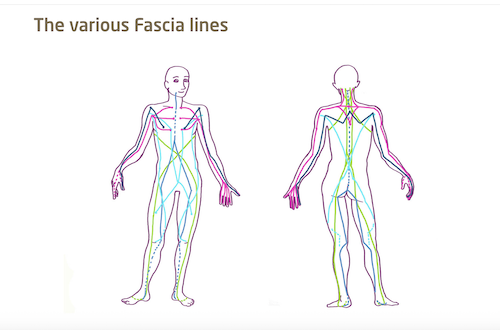
This one more turn with the pine cone metaphor more fully explores energy flow spirals from the pelvic floor to extremities. The quadrant breath lesson is still the foundation, with the fascia lines and some of the Traditional Chinese Medicine meridians as imaginary guidelines. How deeply and uniformly do you receive the breath into the pelvic floor? Can you find diagonal lines through the torso that unkink knots, highlight blind spots, or realign the spine?
Science Nerd Candy Bowl:
The Spirals in a Pine cone - The Smart Happy Project (2:31) - happy artist paints many different, sometimes intersecting, spirals of a pine cone
The Hidden Secret Inside Every Pine cone - YouTube shorts (0;56) - pine cones replicate the Fibonacci series found across nature
You Have the Fibonacci Series In Your Hand - @markliamsmith (0:45) - demonstration of the Fibonacci series expressed in the human hand
Pine Cones Opening Time Lapse - Pro Timelapse (1:16)
Places You Won't Believe The Golden Ratio & Fibonacci Sequence Appears - Be Amazed! (11:07) - examples of the golden ratio and Fibonacci curves in nature; Plants explored at 5:07.
Fibonacci Sequence—A Handy Mathematical Approach For Looking At Evolution! - Science Friday - videos embedded in this science lesson
Flexion and Extension of the Spine -@AnatomyApp (0:42)
Rib Animation During Breathing - Amy Ward Brimmer - (1:02)
Set up for supine lesson:
Mat on floor with room to reach overhead and support for knees and head as needed
Seated on a chair with knees and hips level
How you might feel after this lesson: Experience the ribs opening and closing with the breath; Experience the Feel the spine and ribs together; Get a deep, deep breath;