
Learning from Trees - 2 - Xylem, Phloem and Tori
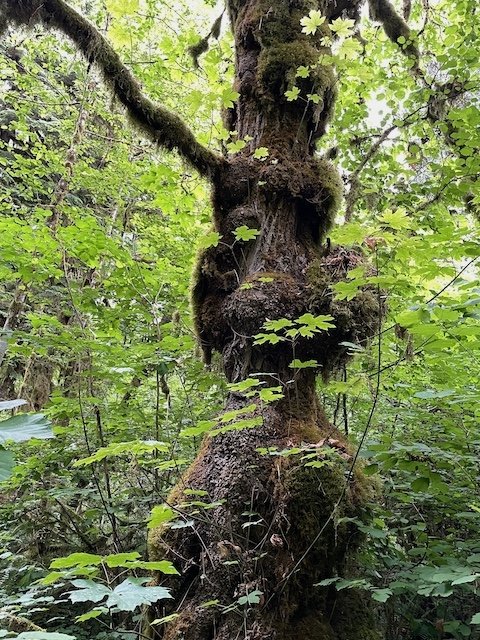
Learning from Trees: Roots to Crown - 2 - Xylem, Phloem and Tori
Balancing energies of the respiration torus in plants and people
Based on – “Evolving Undulations” from Restorative Rhythms by David Zemach-Berson GCFT®
Water up, energy down and around. That is the essence of plant circulation. There are fancy physics that describe the flows but explaining them is not my job. But I can find inspiring similarities and extrapolate to greater spiritual considerations.
Last session was about the forces of human expiration: the upward force of the pelvic floor in concert with the respiratory diaphragm in balance with the downward thrust of the shoulders through the pelvis to feet. There is also the very subtle downward energetic force from the pelvis to the soles of the feet.
Now for second half of the lesson: inhalation. From the pelvic floor work, we know that inhalation presses the belly stuff into the pelvis, very subtly and gently, and the pelvic floor receives the contents. A slight release of the abs and the downward pressure of the belly stuff presses the pelvis forward. The low back, stabilized by the psoas, helps hold the pelvis from collapsing forward.
Energetically, inspired air/energy flows down the center line, through the pelvis and into the pelvic floor. If you ascribe to Traditional Chinese Medicine, the ‘bubbling wells” at the soles of the feet open to suck up earth energy on the inhale. On the body periphery, the ribs expand upward on the inhale, the shoulder blades glide inward and there can be a general sense of lifting.
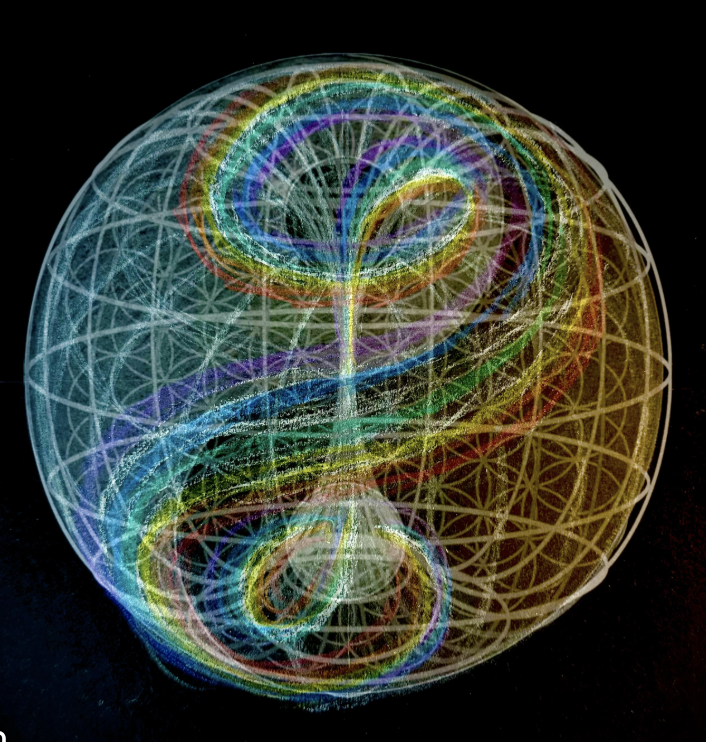
That is where we pick up this lesson. Inhale down the center line as the ribs fill outward, the pelvic floor receives and the pelvis rocks forward. Inhale up the center of the leg as the feet flatten to the floor. Potential energy rises. Eventually we pair inhale and exhale as we visualize an energetic torus, a self-sustaining system the exemplifies balance and renewal, as its structure inherently supports perpetual motion and cyclical patterns.
Trees breathe too, and according to some research, see below, they might even exhibit some movement with the flow of water and food as night comes on and photosynthesis slows down. A bit of science nerding from Britannica.com
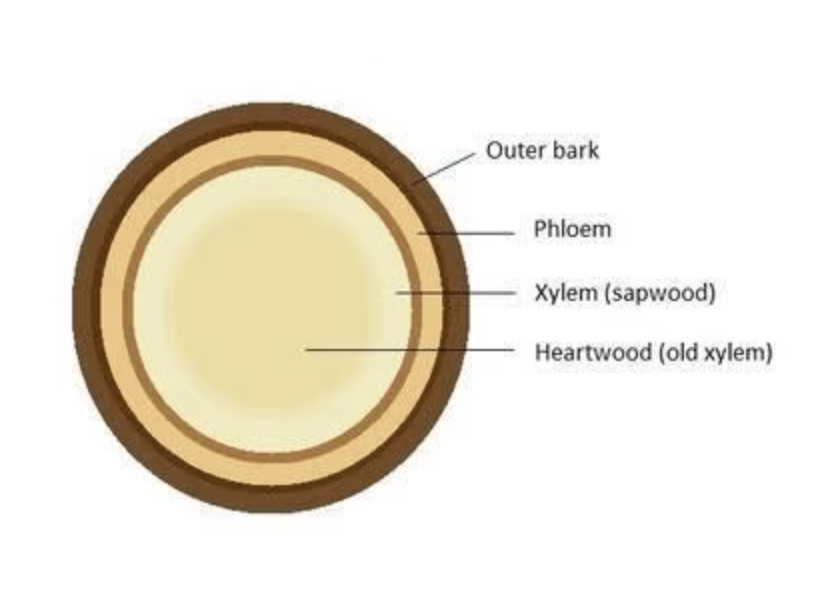
The [tree’s] vascular system is comprised of two main types of tissue: the xylem and the phloem. The xylem distributes water and dissolved minerals upward through the plant, from the roots to the leaves. The phloem carries food downward from the leaves to the roots. Transpiration, in botany, a plant’s loss of water, mainly through the stomata of leaves. Stomatal openings are necessary to admit carbon dioxide to the leaf interior and to allow oxygen to escape during photosynthesis. Hence, transpiration is generally considered to be merely an unavoidable phenomenon that accompanies the real functions of the stomata. It has been proposed that transpiration provides the energy to transport water in the plant and may aid in heat dissipation in direct sunlight (by cooling through evaporation of water), though these theories have been challenged.
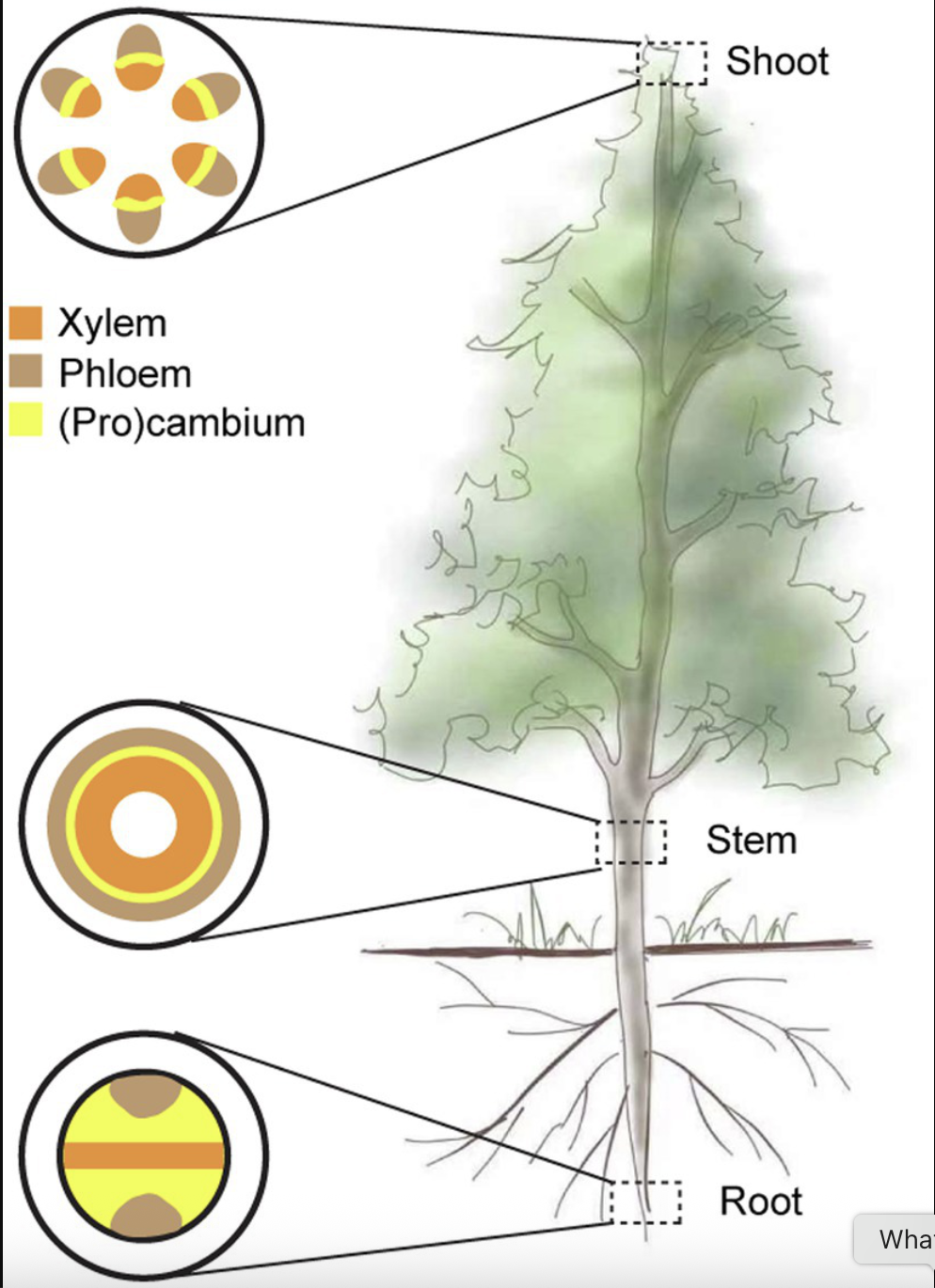
One of the most important processes sustaining life on Earth is the transport of water from the ground and into the leaves where the photosynthesis and capture of the sun's energy take place. When a team of researchers from Denmark and Hungary repeated the experiment [of measuring the movement of leaves and boughs at night] by bringing twenty-two individual tree and shrub species together and scanning them overnight under strictly controlled conditions, they were surprised: "We detected a previously unknown periodic movement of up to one centimeter in cycles of two to six hours. The movement has to be connected to variations in water pressure within the plants, and this effectively means that the tree is pumping. Water transport is not just a steady-state flow, as we previously assumed," said postdoc András Zlinszky at Aarhus University, department of Ecoinformatics & Biodiversity. The results revealed that some trees have shorter or longer sleep periods than 12 hours and others show slow continuous movement in one direction probably because of disease or senescence.
The most striking finding was that all the studied plants displayed pulses of minute periodic movement overnight. This was particularly striking in the Magnolia tree, which completed three full cycles of up-and-down branch or leaf movement during one night. Although the crown displacement measured was only about 1 centimeter, the scientists are confident that this is not a measurement error… Short-term plant movements are caused by changes in water pressure within tissues. It is generally assumed that water transport in trees takes place as a steady-state process with no variations faster than the day and night cycle. The new findings suggest that short-term change in water transport and tissue pressure is widespread… The exact role and mechanism of this process have to be studied with further dedicated experiments, but these findings definitely challenge the widespread view of trees as static, passive organisms.
Our lesson, from “Reset Your Body Beat,” opens us to experiencing the energetic torus modeled in plants and available to us. From Exploring the Torus from natureofflowers.com
The inward spiral of the torus represents introspection and self-awareness, while the outward flow symbolizes expression and connection with the external world. This mirrors the cyclical nature of learning and growth, where we absorb knowledge, integrate it, and share it with others. The torus challenges us to transcend duality. By visualizing its harmonious flow, we can attune ourselves to the universal energy that unites all beings. As a shape that reflects life itself, it encourages us to embrace both the known and the unknown, finding beauty in every twist and turn of the journey. The torus serves as both a guide and a muse. It challenges you to innovate, explore, and share your findings with the world. The torus, in its perfect balance of simplicity and complexity, remains one of the most compelling symbols in sacred geometry. From the human energy field to the cosmos, it offers a model for understanding the interconnected nature of existence.
We will use the kidney healing sound: choooooo to help amplify your awareness.
Science Nerd Candy Bowl:
The Tree Listener - Maple Hill Tree - at 4:05 we hear the sound of liquids flowing in a Copper Beech tree
SOUNDS FROM THE TREE (Bio Acoustics Of Plants) - Sonoquilibrium - (2:01) Just like it says - the sounds from inside a tree
Ultimate Torus Animation - Leianne Wilson (1:42) - how the torus builds energy flows into a closed system
Set up for supine lesson:
Lying on a mat with appropriate support for head and legs as needed
Room to extend arms overhead with legs long
Or sit on a firm chair
How you might feel after this lesson: Feeling taller with each breath; Connecting feet to crown energetically; Relating pelvic floor to balance and power; A moment of relationship with nature and trees?