Pelvic Floor Revisited: Spiraling In - 4 - Squeeze and a Kiss continued
Pelvic Floor Revisited: Spiraling In - 4 - A Squeeze and a Kiss continued
Spiraling into the pelvic floor system - the cheeks complete the system
Based on “Based on Pelvic Floor Discovery – 5 – Balancing the Buttocks” as taught by Deborah Bowes, PT, GCFT® and “The Cork Lesson” by Mara Fuser, GCFT®
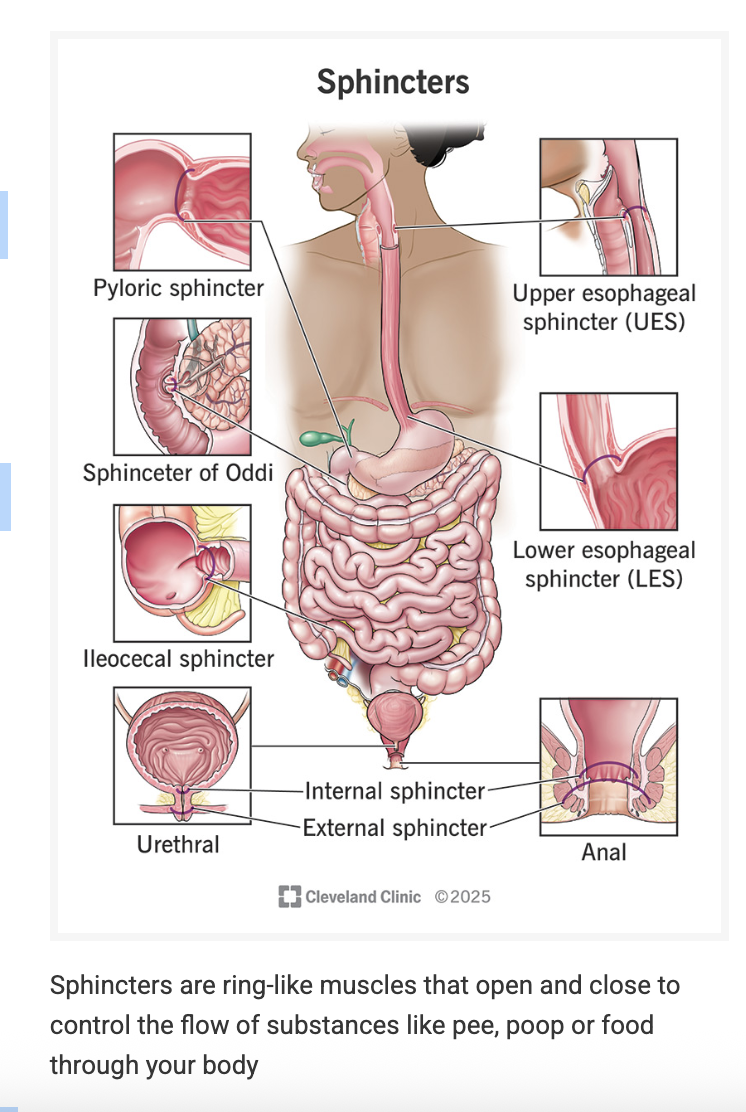
No matter how many times we review the pelvic floor material, there is always something new to learn. This week we focus on those circular muscles that control how substances flow through the body: sphincters.
“The aim of this study was to determine the efficacy of the Paula method of circular muscle training in the management of stress incontinence (SI). The theory behind this method states that activity of distant sphincters affects other muscles. [We tested] Efficacy ... by reports of incontinence, quality of life (I-QOL), pad test, and pelvic floor muscle strength (assessed by perineometer and digital examination). Both the Paula exercises and pelvic floor training produced significant changes in urinary leakage compared to baseline as measured by the pad test [mean decrease of 5.4 g (p=0.002) and 9.5 g (p=0.003), respectively]. Women randomized to the Paula method reported improvement in I-QOL scores. The Paula method was found to be efficacious for SI in a population of Israeli women.
”
According to the Cleveland Clinic: Sphincters are circular-shaped muscles that open and close to control the flow of food, air, bile, pee and poop through your body. When a sphincter is relaxed, a substance can easily flow through it. But when it’s contracted or tightened, nothing can flow through it because it’s closed. Your sphincters play an important role in many bodily processes like digestion, urination (peeing) and defecation (pooping). Most major sphincters are part of your digestive and urinary systems. But you also have sphincters in your eyes (iris sphincter) and blood vessels (precapillary sphincters).
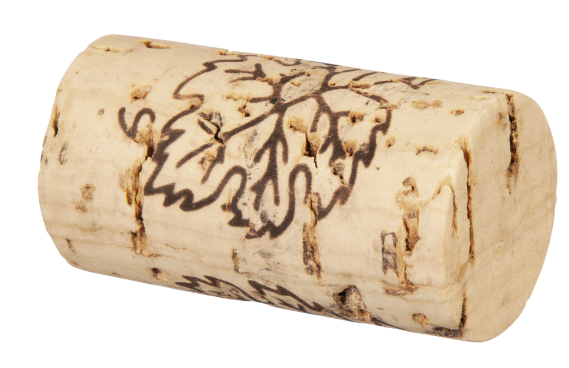
We will again be applying the “Paula Method” of sphincter management with a favorite tool: your wine cork. Paula Garbourg, a singer, pianist and dancer in pre-Nazi Germany, found herself incapacitated with an illness that doctors thought would confine her to a wheelchair for the rest of her life. Paula, now living in Israel, was only 35, and refused to accept the diagnosis.
Applying skills she learned in her artistic youth, and with her own deep body awareness, she found that coordinating the ring muscles and the entire body reduced her pain and eventually enabled her to live a full life. Paula observed that when the Ring Muscles all work together, we are in good health. When the Ring Muscles do not work together, illness and imbalance result. By improving the functioning of these muscles, she discovered, we can free ourselves of various pains and health problems. Her book, The Secret of the Ring Muscles, was published in 1982. Since then, clinical trials show that learning to manage your circle muscles does improve stress incontinence.
I am not certified in the Paula Method,® but there is enough resonance with the Feldenkrais Method and my own practice, that I feel confident suggesting we all try applying it. With a cork. In the context of our pelvic floor studies.
Holding a cork softly between the lips has the first benefit of softening the whole face. You really can’t grumpy face holding a cork between your lips. The cork also brings attention to the whole sequence of circle muscle contractions that, when coordinated, according to the Paula Method, results in better overall health.
All of that is an intro the the other focus of this lesson: the glutes.

The glutes provide hip stability, effect movement and balance and are thus key to posture. We continue matching corks to glutes to both explore how the glute contractions can coordinate with all the sphincters. Also, strengthening the glutes in different orientations to gravity. Left versus right side preferences are likely to reveal themselves, which is great! You know what to work on!
This lesson begins on the back. It progresses to standing on knees. If your knees don’t like that idea, have a stool to perch your sit bones; . it’s less stress on the knees but still perfectly appropriate for doming out those buns.
Science Nerd Candy Bowl:
How Breathing and The Core Influence the Pelvic Floor, Kinetic Labs: (first 45 seconds most useful) A balloon demonstrates how the diaphragm and pelvic floor interact during breathing
The Glutes Series Part 3: Gluteus Maximus (Tensor Fascia Latae and it Band) (3D Animation)) , Anatomy Lab, (3:16) Traces the glute connections to pelvis and down the leg
How the Gluteus Medius Stabilizes Your Body During Hip Abduction | Hip Abduction Exercise Tips., Anatomy Lab (3:06) How the deepest glute connects the femur and outer pelvis
""The Gluteus Minimus: Key to Hip Internal Rotation"", Anatomy Lab (0:36) The muscle that adds to turning the femur
Set Up for Supine and Kneeling Cork Lesson:
(Optional) Bring a clean cork that you don’t mind holding between your lips
Lying on a mat with support for head and legs as needed
Padding for the standing on knees part
Or sitting on a chair where you can perch comfortably at the front edge, with feet under knees and padding to build up the floor for the standing on knees part
How you might feel after this lesson: Tuned into your root chakra/pelvic floor, New sense of the coordination of breath and pelvic floor contraction and release; Sense of the pelvic floor as a muscle group; Connected from pelvic floor up the center line to the head; Softer lips!; Better understanding of how timing the exhale and glute grab enables tremendous core power; Sense of when the pelvic floor is relaxing.
If you have a link for Wednesday 9:30 am or 6:30 pm class registration, keep using it. $40/month; $15/single lesson. PayPal or Venmo to jackisue@aol.com. Or check to Jacki Katzman, PO Box 116, Bethlehem, NH 03574
For registration, Click Here