
Learning from Trees - 6 - Lean into the Light
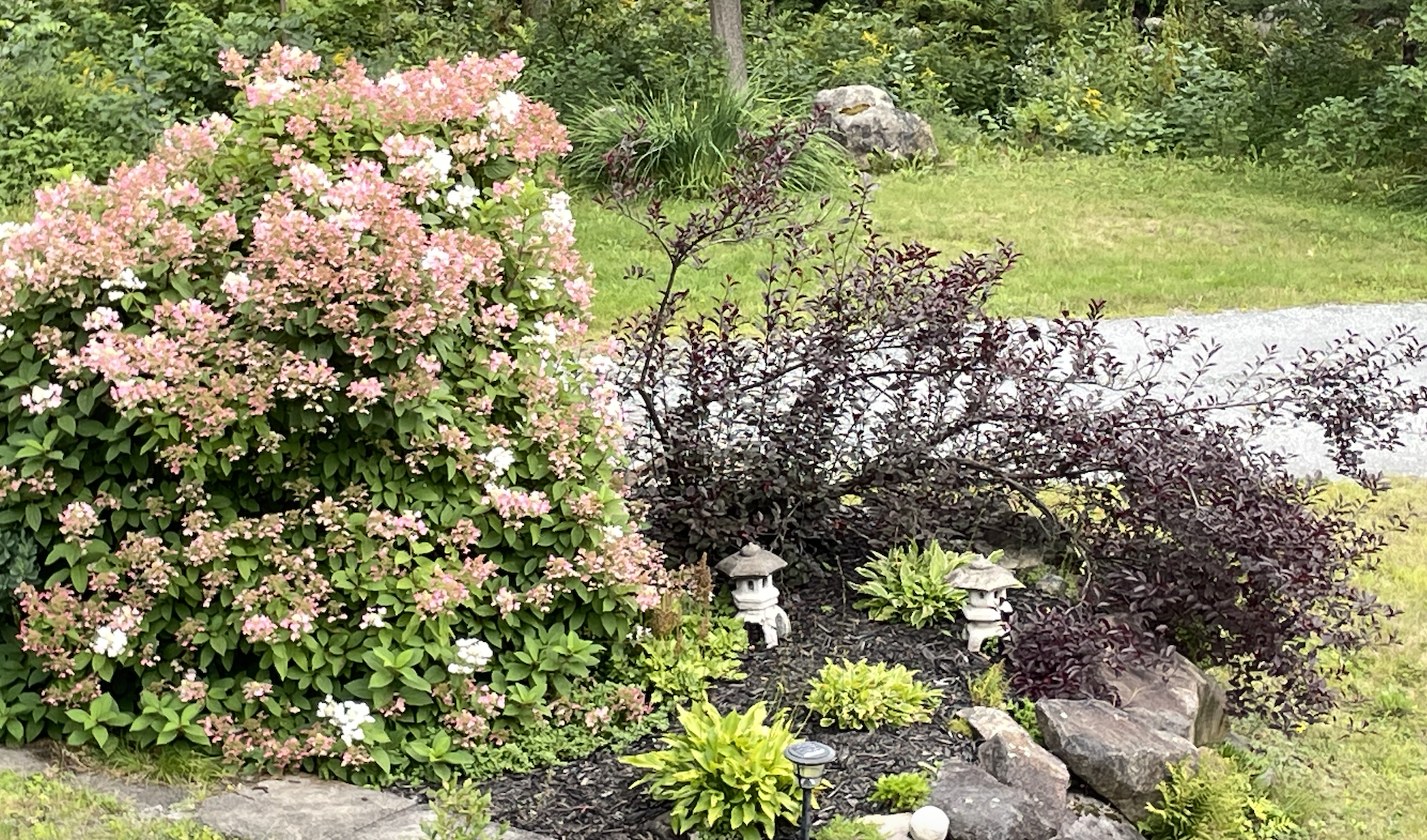
A hydrangea and sand cherry, with woods behind them, lean into the western sun.
Learning from Trees - 6 - Lean into the light
Phototropism for arms - extension as magnetism towards the source
Based on “Fiddling Arms” by Moshe Feldenkrais in Amherst as taught by Prisca Winslow, GCFP®
Our cross-species exploration has followed the flow of water up from the roots and nutrients down. We have compared how roots stabilize the tree by in gravity (geotropism) to how our feet spread on the ground for stability and use gravity for propulsion,. We have imagined the soft breathing of leaves through soft hands.
We return to upward growth and positive phototropism. Branches and stems bend towards light as cells on the dark side are stimulated to grow faster than the cells receiving light.
From Wikipedia with maybe more detail than you need: in the presence of asymmetric light, auxin will move towards the shaded side and promote elongation of the cells on that side to cause the plant to curve towards the light source.[7] Auxins activate proton pumps, decreasing the pH in the cells on the dark side of the plant. This acidification of the cell wall region activates enzymes known as expansins which disrupt hydrogen bonds in the cell wall structure, making the cell walls less rigid. In addition, increased proton pump activity leads to more solutes entering the plant cells on the dark side of the plant, which increases the osmotic gradient between the symplast and apoplast of these plant cells.[8] Water then enters the cells along its osmotic gradient, leading to an increase in turgor pressure. The decrease in cell wall strength and increased turgor pressure above a yield threshold[9] causes cells to swell, exerting the mechanical pressure that drives phototropic movement.
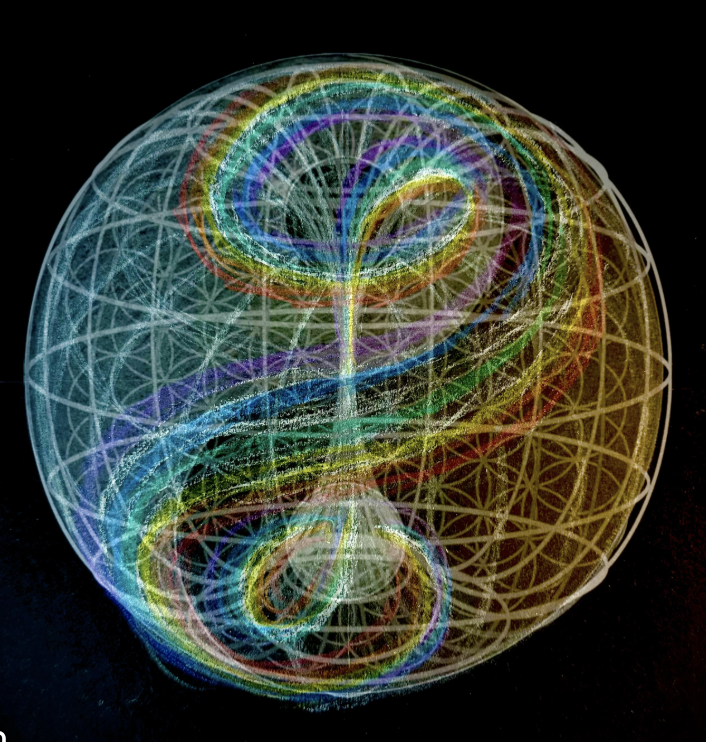
The energetic torus of a plant as water ascends and food circulates and descends.
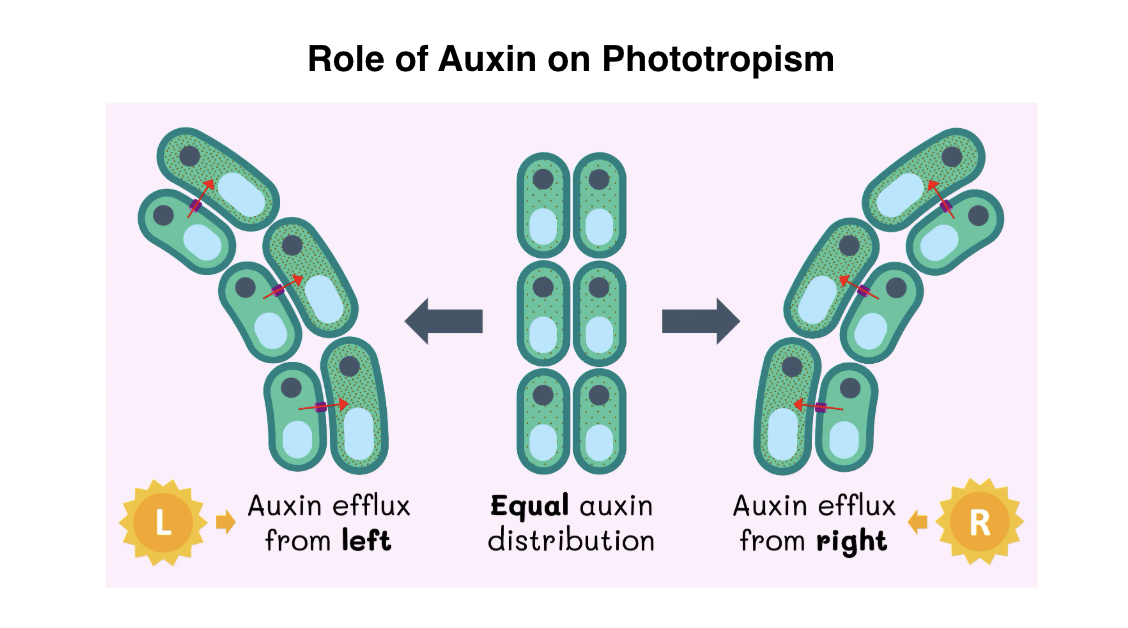
auxin’s effect on growing plant material. source: https://ib.bioninja.com.au/phototropism/
The shape of trees is very much determined it’s sources of light. A tree in the middle of a field can be fully symmetrical. A tree growing at the wood’s edge reaches out to the light. Trees in the middle of the forest strive upwards. Trees like those in my garden reach towards afternoon light; the forest behind them have pushed the hydrangea and sand cherry to reach forward, and no pruning will change their decisions.
As the stems reach towards the light, the roots are shying away. We feel into this dynamic in this week’s lesson, a variation of the ‘fiddling arms.’ Lying on one side (and then the other) imagine arms as stems or branches growing outward and then curling toward the light. Reaching forward from the trunk, our ‘tree-arms’ explore their environment. Light sources may be coming from different orientations, at different angles . And like in nature, where the roots shun the ligh and respond to gravity, feet have a role to play in this game.
And we enter a strange space of cross-species role play, imagine our trunk is solid, gradually adding girth. Just below the bark, water flows up and food flows down, just as our breath flows down and up. The pelvic floor serves as stabilizing root ring, balancing the pull of gravity with the pull of light.
This is another deeply relaxing and trance-induing lesson. Be prepared to go deep, breathe deep, and explore connections between the breath, the opening and closing of the hands in synchrony with the lips, feet and pelvic floor.
We will use the liver healing sound: shhhhhhh to help amplify your awareness.
Science Nerd Candy Bowl:
Phototropism Explained - Science Sauce - (3:29) charming celtic-accented teacher explains how plants bend toward the light
How Trees Grow - Kevin Outdoors - Canadian wood guy explains heartwood, sapwood, dead xylem, growth rings, and why, while it is not good to peel off birch bark, stealing the bark won’t kill the tree.
The Tree Listener - Maple Hill Tree - at 4:05 we hear the sound of liquids flowing in a Copper Beech tree
SOUNDS FROM THE TREE (Bio Acoustics Of Plants) - Sonoquilibrium - (2:01) Just like it says - the sounds from inside a tree
Ultimate Torus Animation - Leianne Wilson (1:42) - how the torus builds energy flows into a closed system
Set up for side lying lesson:
Mat on floor with room to reach arms out, ideally in both directions
Optional padding for head and between knees
Or side sitting on a chair with no arms, knees level with hips, with room to extend arms to the sides
How you might feel after this lesson: Feeling taller with each breath; Experience the lightness of arms and legs being drawn outward; Relating pelvic floor to stability, balance and power; A moment of relationship with nature and trees?