Learning from Trees - 8 - Vertical and Spiral Growth
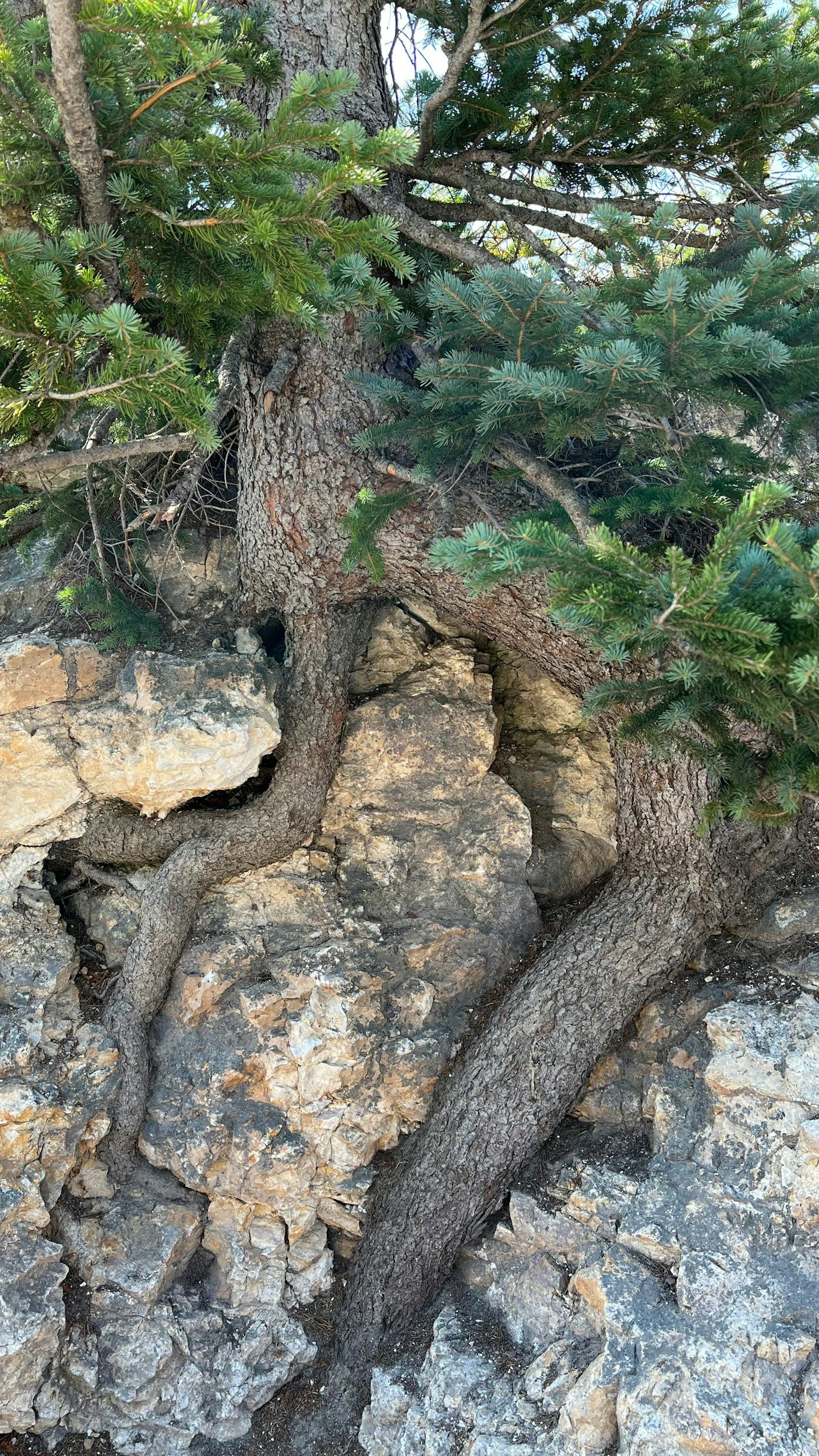
Spiral growth patterns seen in some conifers allow dominant roots to support the entire tree crown,
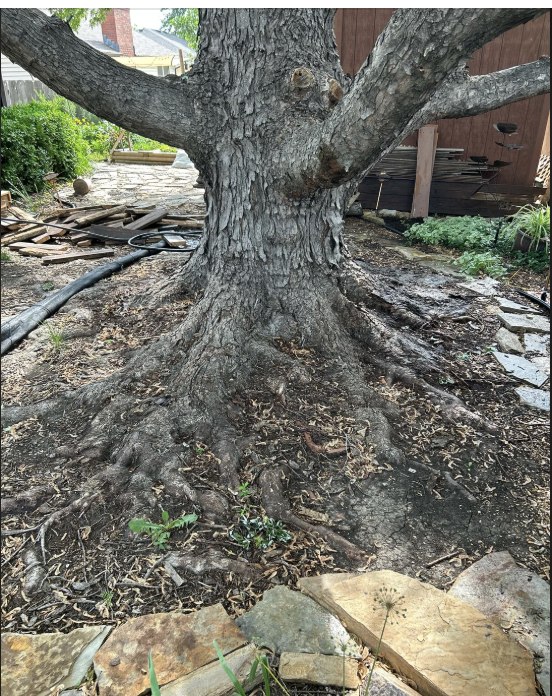
Maples grow leaves in opposites, their growth patterns support vertically direct root to limb connections
Learning from Trees - 8 - Vertical and Spiral Growth
One root, one branch/One root, entire crown
Based on “Minimal Movement of Shoulders and Hips”as taught by Arlyn Zones, GCFT® and “AY #256: Lines crossing and balancing the body” as taught by Olena Nitefort, GCFT®
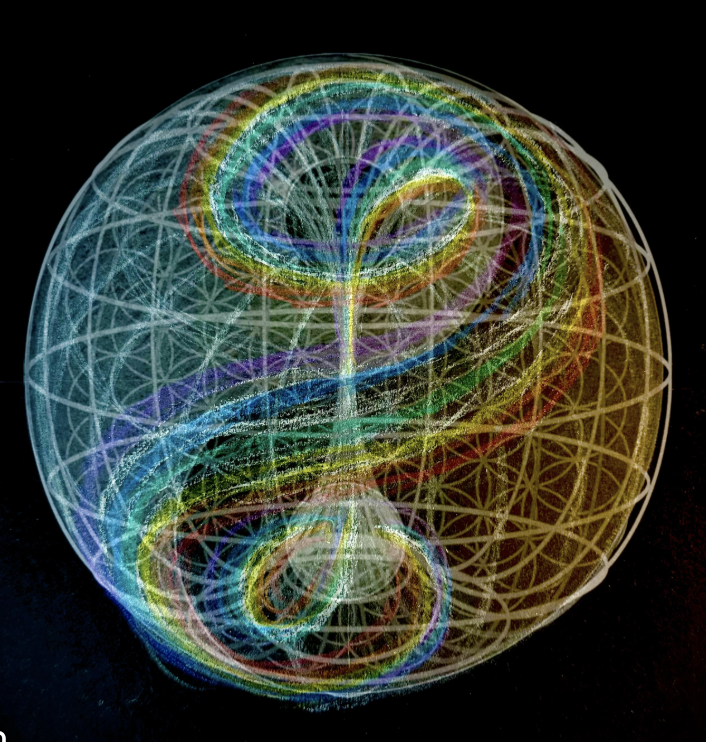
The energetic torus of a plant as water ascends and food circulates and descends.
Conifers, evergreens with needle-like leaves, can choose a spiral growth pattern, both in the trunk and in branches and leaves. The arrangement of needles, buds, and cone scales on most conifers follows a spiral pattern, but a twisting spiral growth pattern in the trunk's wood (known as spiral grain) occurs in roughly 30% to 60% of conifer trees.
This compares with most deciduous trees, like oaks and other ring-porous species, which typically grow with a straight vertical wood grain rather than a twist. Some deciduous species can adapt to environmental stresses such as high winds, uneven sunlight, or a heavy canopy by twisting, but they aren’t programmed that way.
In the vertical architecture, the distribution of food and water is efficient. One root sends water up to a specific branch and visa versa. The spiral design - or twisted grain - enables a tree to more easily distribute nutrients and water from any part of the tree to the entire body. A root that has the best access to water, for example, can share that water with the entire crown.
Spiral design also helps the tree bend more easily that the vertical plan. Spiral-grained materials deflect (or bend) more than straight-grained materials. During deflection of straight-grained materials, the side nearest the force is compressed while the opposite side is stretched, putting it under tension. In contrast, spiral-grained materials transfer the compression and tension forces along the spiral to the other side, thereby equalizing the stresses.
We humans have both vertical and connected diagonal (spiral in this case) architectures built into our skeletal structures, enabling stability, balance, efficiency, adaptability and movement. I feel guilty using this AI summary, but here we go:
Vertical forces travel up and down the body. They handle gravity and ground impact.
Foot Arches: Three arches absorb ground impact. They flatten and rebound.
Ankle Joint: Transfers weight to the foot. It acts as a hinge.
Tibia and Fibula: Tibia bears 90% of lower leg weight. Fibula handles 10%.
Knee Joint: Locks for stability. It absorbs shock through menisci.
Hip Joint: Transfers lower limb force to the pelvis. It uses a deep ball-and-socket design.
Pelvis: Acts as a mechanical arch. It splits weight equally to both legs.
Spine Curve: Four natural curves act like a spring. They absorb axial compression.
Intervertebral Discs: Gel-filled pads between vertebrae. They cushion vertical shocks.
Cross-Body Connections: Muscles and connective tissues (like the spiral lines) connect your lower and upper body across your center line, linking a planted foot to your core and opposite arm. [1]
Force Transfer: Instead of absorbing impact or gravity in a straight up-and-down line, diagonal forces distribute load and momentum smoothly across multiple joints. [1, 2]
Dynamic Equilibrium: When you stand, walk, or shift weight, minute adjustments happen diagonally to counteract gravity and prevent falls. [1, 2]
Opposing Rotation: As one leg steps forward, the opposite arm swings to naturally rotate the pelvis and ribcage in opposite directions, stabilizing your center of gravity. [1]
This lesson is a tour of our body’s vertical, diagonal and spiral patterns with a return to the torus as an architectural model. Are you an efficient one root, one limb type. Or does one root, entire crown appeal to you? Or both?
Science Nerd Candy Bowl:
Boneman Pro - (0.56) a bungee chord model of how the human skeleton moves in vertical and diagonal/spiral direction
13 Amazing Facts About Conifers - HD Video - Arden Tree Farms (4:13) general tutorial on conifers, though no mention of spiral grain nor how roots feed the crown.
Set up for supine lesson:
Mat on floor with support for knees and head as needed
Seated on a chair with knees and hips level
How you might feel after this lesson: Feeling taller with each breath; Experience the lightness of arms and legs being drawn outward; Relating pelvic floor to stability, balance and power; Sense vertical and diagonal force patterns in the body; Feel into the support available by thinking in diagonals; A moment of relationship with nature and trees?