Pelvic Floor Revisited: Spiraling In - 2 - Ab Grab and the Deep Squeeze
Pelvic Floor Revisited: Spiraling In - 2 - Ab Grab and the Deep Squeeze
Spiraling into the pelvic floor system - Pulling in Wisely
Based on “Pelvic Health and Awareness – ATM 3: Engaging the Abs and ATM 4: Activating the front and back of pelvic floor ” as taught by Deborah Bowes, PT, GCFT®

Another swing through the pelvic floor lessons. Everything builds from it.
This condensed format of Deborah Bowes’ original “Pelvic Health and Awareness” program spirals us into closer connections between the elements of the pelvic floor system: the breath that drives the system, pelvis that contains the and structures the system, legs that support and guide the system in gravity, the low backj/abs that connect the pelvis to breath and hold the torso above the pelvis, and the glutes that provide power and stability to the pelvis in motion.
These elements support the pelvic floors’s five functions (according to the Cleveland Clinic): Movement of the body: legs, hips, trunk; Continence; Sexual function; Prevent prolapse of abdominal organs; Support circulation in the legs. I would add to that the pelvic floor is essential for balance and can be the fine attunement that can help athletes break through performance plateaus. For pregnant people, pelvic floor movements can attune you to adjusting to your ever-changing body.
This session integrates breath and pelvic rocking with the ‘ab grab’ and sphincter lift that bring solidity and strength to the middle of the body. Coordinated breath and ab grab is the base of the karate kia and general power in movement. Coordinated sphincter contraction and breath are the basis for controlled continence. We will also add in the Taoist Healing Sounds to focus the breath and activate the traditionally assigned energies associated with the organ groups.
Every time we spiral around to this content, I find one more science-y detail. Did you know that the pelvic floor has two layers: the superficial (closer to the outside of the body) layer that tracks with the maps we usually see, AND the deeper layer, the levator ani. According to Wikipedia:
The levator ani is a broad, thin muscle group, situated on either side of the pelvis. It is formed from three muscle components: the puborectalis, pubococcygeus, and the iliococcygeus. It is attached to the inner surface of each side of the lesser pelvis, and these unite to form the greater part of the pelvic floor. The coccygeus muscle completes the pelvic floor, which is also called the pelvic diaphragm. It supports the viscera in the pelvic cavity, and surrounds the various structures that pass through it. We can’t really sense this muscle unless it spasms or causes pain, but it’s interesting to know that the pelvic floor is even more nuanced that I knew.
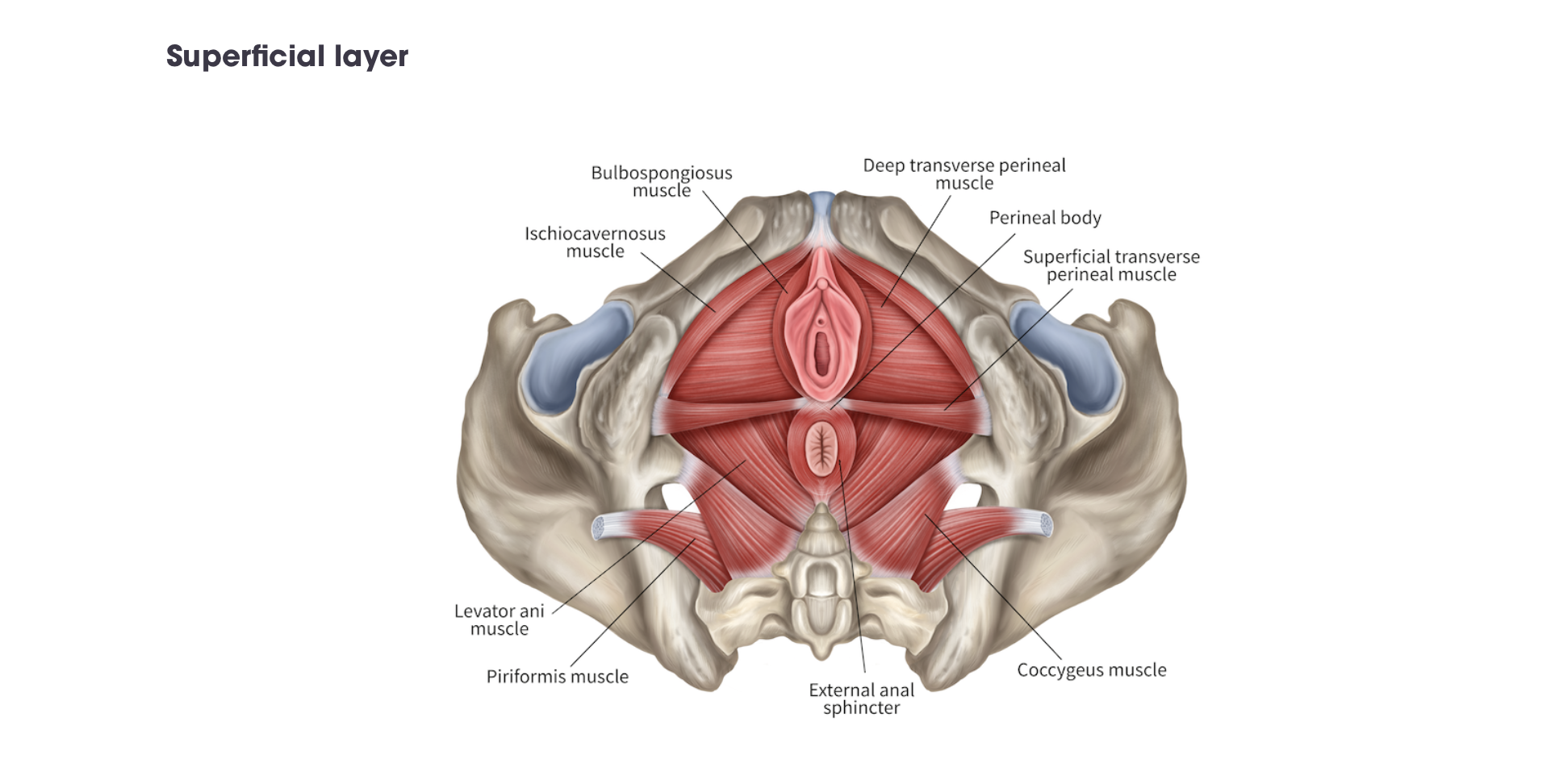
This is the layer that faces outward, from the organs to the skin
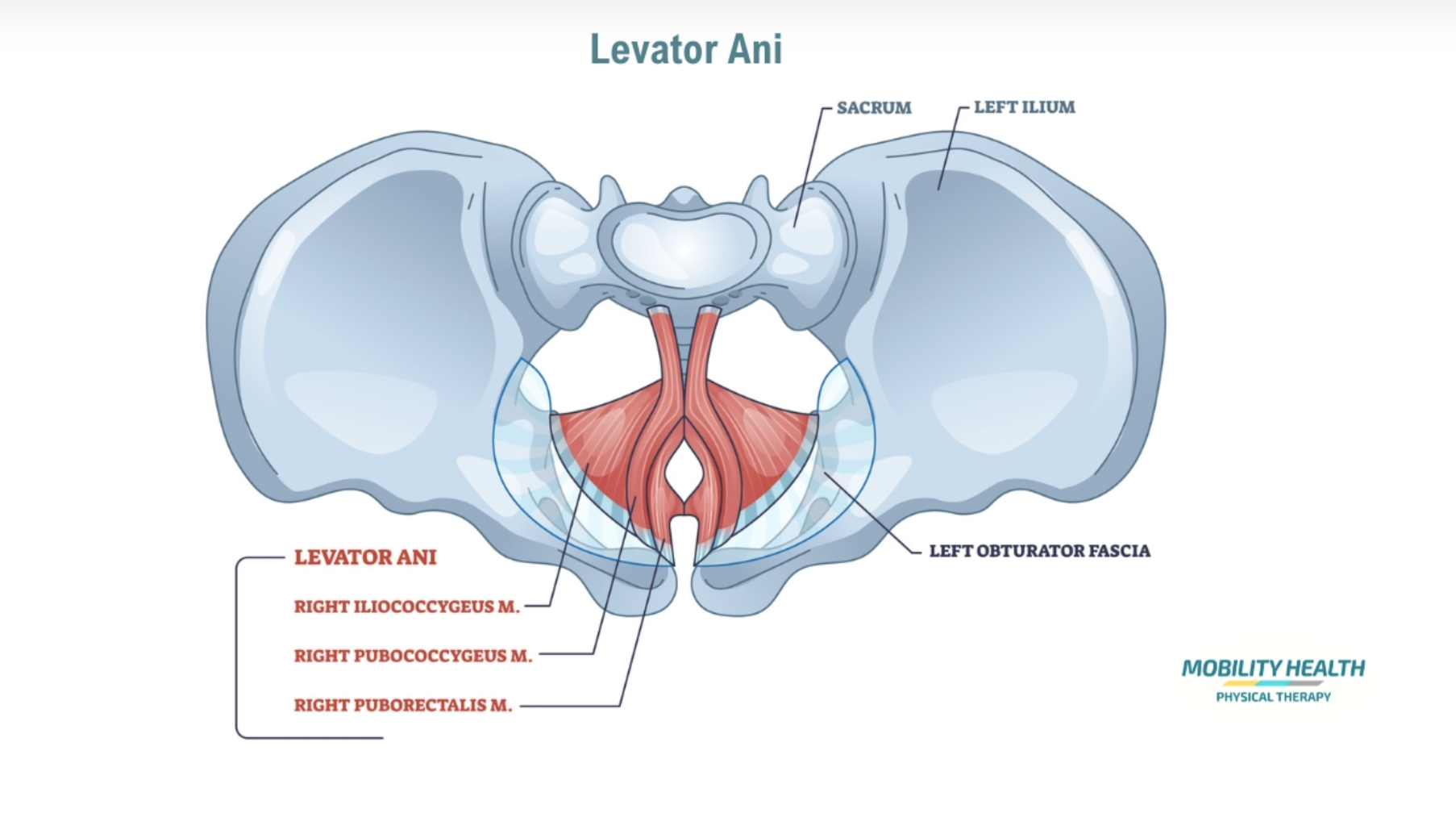
This is the deep layer, closer to the organs, that I hadn’t known about. Notice the larger space allowed for the colon
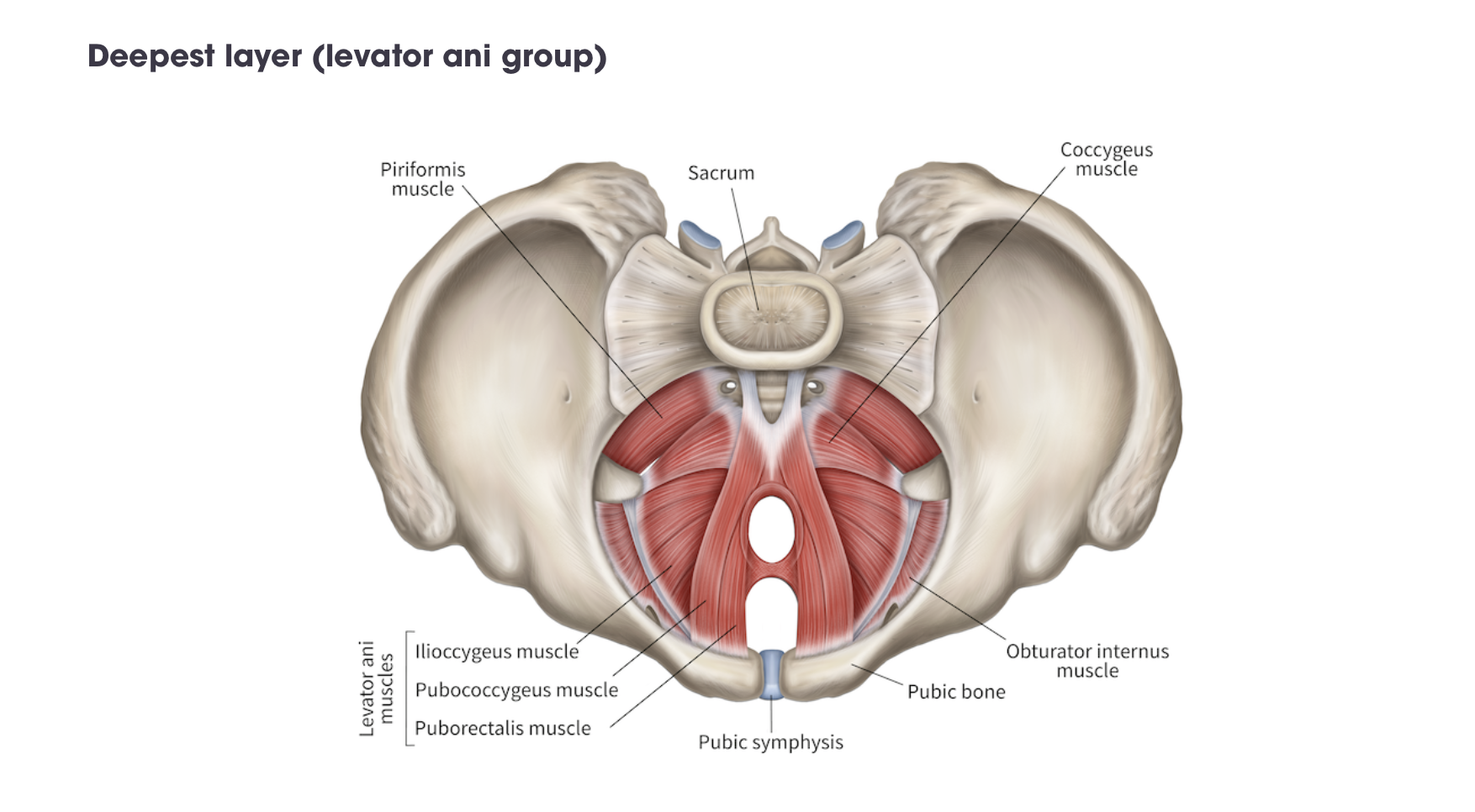
This is the deeper layer grouping of three muscles that do a lot of the support work for internal organs. Notice the larger openings for the colon, vagina and ureter
Spiral in, take it deeper, be more quiet, and seek the natural coordination of breath, rock and squeeze. More power to you!
Science Nerd Candy Bowl:
How Breathing and The Core Influence the Pelvic Floor, Kinetic Labs: (first 45 seconds most useful) A balloon demonstrates how the diaphragm and pelvic floor interact during breathing
The female pelvic organs: the muscles of the pelvic floor, the inner walls of the pelvic cavity (a 7 minute exploration of all the bones, muscles and organs that layer up to create the pelvic floor system)
Levator Ani - MDedge: news and insights for busy physicians: (7:00 minutes) Not for everyone - a cadaver dissection that shows the muscles of the pelvic floor. Trust me, the illustrations make it look much simpler than it is. But if you are curious, I recommend watching at 2x. It is interesting.
Set Up for Supine Lesson:
Lying on a mat with support for head and legs as needed
OR Leaning back in a comfortable chair so head and neck are supported
Blankets and socks as needed
How you might feel after this lesson: Tuned into your root chakra/pelvic floor, Connected from front pelvis to back; New sense of the coordination of breath and pelvic floor contraction and release; Sense of the pelvic floor as a muscle group; Better understanding of how timing the exhale and ab grab enables tremendous core power; Better understanding of how the breath supports holding in and releasing urine and poop; Sense of when the pelvic floor is relaxing.
Wednesday 9:30 am or 6:30 pm class registration, keep using it. $40/month; $15/single lesson. PayPal or Venmo to jackisue@aol.com. Or check to Jacki Katzman, PO Box 116, Bethlehem, NH 03574
For registration, Click Here